Upplagd av
Alexander
Wednesday, February 6, 2013
kl.
10:55 AM
In this first episode of Highlights interview series at Hightlights TV we hooked up with KRIS [WOL-3D]. He´s an active youngster and together with his crew WOL they are one of Stockholms the most active crews for the moment. From north to south, west to east, trains, walls & fames...
In this episode you will get to know him more on a personal level. Highlights met him over a cup of coffea talking about the past and future and a few things in between.
For english subtitles please klick on the bar in the right corner.
Upplagd av
Alexander
Sunday, January 13, 2013
kl.
1:20 PM
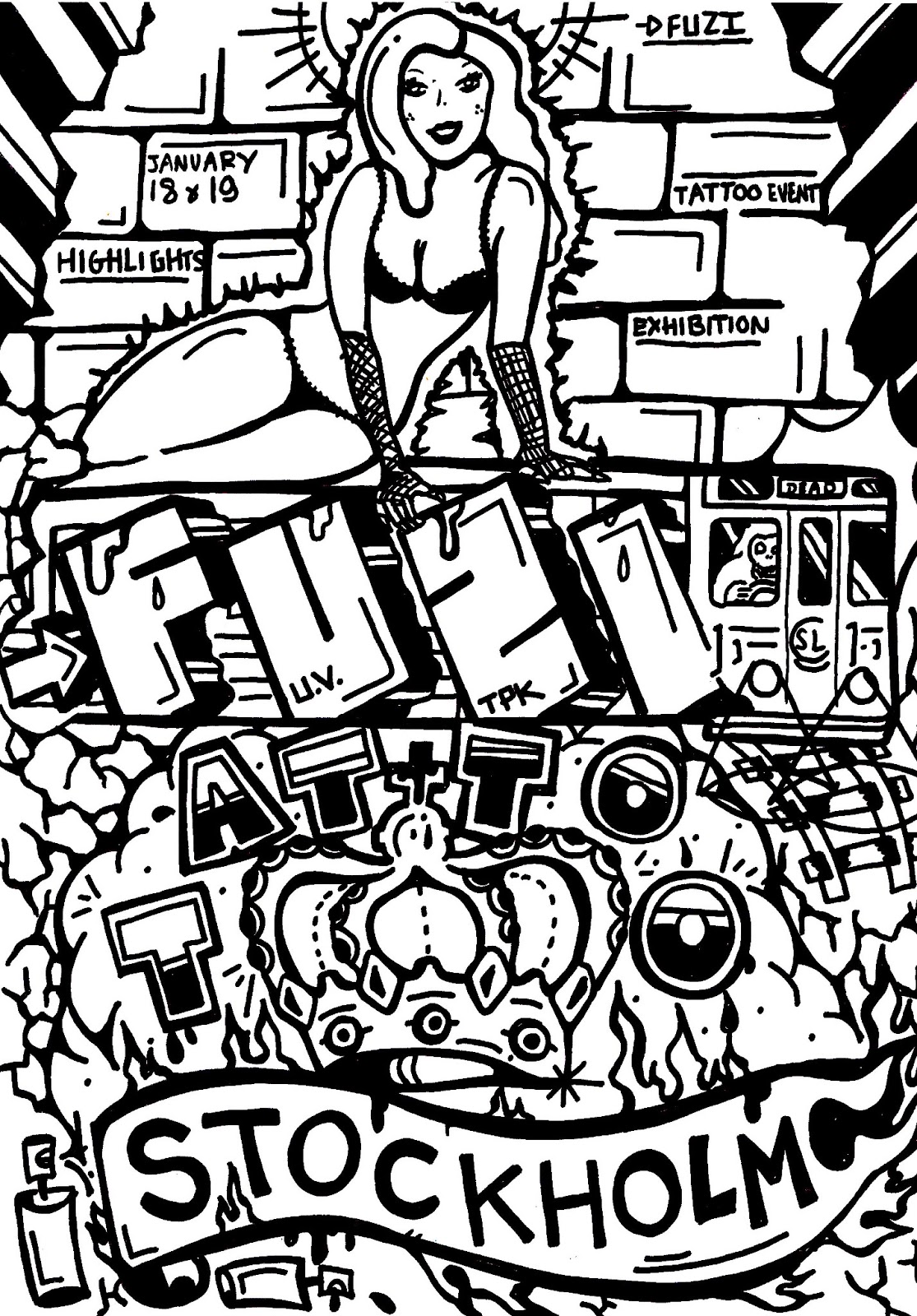
HL Gallery is proud to start 2013 with FUZI UVTPK, one of Paris
most legendary and notorious graffiti bombers and also the inventor of
the “Ignorant Style”. His visit in Stockholm will include an exhibition
and two days with live tattoo sessions at the gallery. Don´t miss the
opportunity to get one yourself, please contact jonas@highlights.nu for pre-booking.
FUZI UV TPK (b. 1975 Paris)FUZI UVTPK
(b. 1975 Paris) grew up in the Paris suburbs. For fifteen years the
French artist dedicated himself with heart and soul to writing his name
on trains. He is the creator of the ignorant style wich is a naive
,childlike style of painting that goes back to the New York graffiti
scene of the seventies.FUZI is co-founder of the legendary group UV
(Ultra Violent). He currently lives in southern France where he writes,
paints, photographs and tattoos. FUZI´s “Ignorant Style” is a mix of the eternal human themes –
violence, love, sex combined with his background of street life,
graffiti and gang culture. But there is always a second degree in the
designs, humour and irony is an important part of his style. You are all warmly welcome to the opening on Friday the 18:th of January, 18:00! During the opening day and the day after FUZI will do live tattooing, if you are interested in getting one yourself please contact jonas@highlights.nu. The exhibition will then go on until the 27th of February.
FUZI´s books Ma Ligne and Flash Tattoo Collection N°1 and will also
be available at the gallery, and can be signed by the artist during the
opening.
Upplagd av
Anonymous
Friday, September 21, 2012
kl.
9:09 AM
Fredag 28:e september kör vi releasefest för boken TRAIN TRACK MEMORIES på HL Gallery. I samband med releasen öppnar vi också en tre veckors fotoutställning med bilder ur boken. Releasefest och vernissage fredag 28 september kl. 18.00-21.00. Utställningen pågår 28 september – 18 oktober.
HL Gallery/Store
St Eriksgatan 64, Stockholm
Öppet: Mån-Fre 11.30 – 18.00, Lör 11.30 – 16.00, Sön: Stängt.
TRAIN TRACK MEMORIES
A book about Stockholm train writing by Leo Rivinoja (Incognito Magazine) and Björn Engberg.
The idea to write your name on a train and watch it roll through the city, first became popular in New York in the early seventies. The phenomenon appeared in Stockholm about fifteen years later, since then the city's subway and commuter trains have been painted frequently. But one important thing has changed since the mid-eighties – train writing today attracts little attention.
Once painted trains could roll throughout the city for months, now they are generally taken out of service immediately. The paintings are removed before hardly anyone other than their originators and a couple of rail workers have seen them. What was once a public art form available for everyone to see, has become a private game only accessible to the players.
This collection of private pictures and personal stories from some of the most prolific writers in the history of Stockholm is an attempt to yet again make train writing visible to the general public. The book features writers like Akay, Ape, Beges, Detch, Erir, Healr, Hnr, Kaos, Ribe, Rilo, Skil, Termit, Terror, Triss & Weston.
The tools used to create art are just as essential as
the art itself. Born from experimentation and a need for a tool that
was ideal for the streets, KRINK revolutionized ink. Artists from all
over the world regard it for its high quality as much as what it
represents to the culture. Continuing the constant need to take it to
the next level, KRINK recently expanded to the digital realm with the KRINK app that takes ink into the world of pixels. It all started with some household items, ink, and a need to write.
In this day and age, acquiring tools for art in the streets
is fairly painless but this wasn’t always the case. At one point in
time, you had to tap into your creative reserves and manufacture your
own tools vis a vis MacGyver. It was as much a part of the game as being
able to paint and that’s the foundation of how KRINK got started. Can
you give us some history into that period of time and some examples of
early home-made KRINK products?
Yes, that’s exactly how KRINK started. When we were kids, me and my
friends experimented with all kinds of things: paint, inks, markers,
building ramps, music, etc… Most of my friends were creative types. For example, back in high school we had what is called mimeographs
instead of xeroxes. Mimeographs used an ink-soaked paper which is a lot
like carbon paper, but wasn’t carbon paper. You could soak the sheets in
alcohol and get a purple ink. People would also take apart existing markers, like a Jumbo Pilot
marker, and stuff the tip with a piece of felt from a blackboard eraser
and flood the whole thing with ink. If you had a red marker and filled
it with black, it made brown. Since the insides of trains lived mostly
underground, the inks didn’t have to be super lightfast and there was no
sun to fade the inks. I grew up around that. I wasn’t a train writer but I started with the
streets. The streets were completely different with lots of different
surfaces, bright sun, etc… I developed an ink and marker to be used
outside in the streets that stood out and wouldn’t fade. I experimented with a lot of different things: containers, different
felt, cotton, foam, etc… A lot of failures occurred, such as leaky
markers, tips that got full of dirt and grime, inks that wouldn’t flow,
etc… It was something that was fun to mess around with and also to work
on trying to find something different to work with. Something that stood
out in a crowd. Once I had a good working model, it was really successful, very
simple and consistent. I had something that was totally different from
what anyone else was using. It stood out and lasted, which is exactly
what I was after.
In my mind, I imagine you as a mad scientist with an
underground laboratory where you spent hours developing inks. Combining
your vast knowledge of chemistry and physics to breed the perfect ink
and the perfect drips. How did the first formulas for KRINK come about?
It’s a mix of interest, personality and tradition. Even today, I’m
interested in tinkering with different tools and see what I can make. I
have some friends that are really similar minded and others who don’t
want to bother with anything. It’s personality and interest.
Graffiti has a really strong tradition of taking things into one’s own
hands. From materials to finding spots, it’s a very important part of
it. It’s that kind of attitude that drove me to keep experimenting. As I said, there were lots of failures, but you have to be willing to fail in order to succeed.
What was the process that later led it to what we know now as KRINK?
KRINK worked really well on the street. It had a very particular
aesthetic which might seem normal today, but back then it was totally
new. I was amazed at the interest, even to this day as it continues to
grow. I followed that path and I answered the phone when it rang so to
speak. KRINK was relatively well-known in the graffiti world which is
very very underground, but it went on to another level when it became
available in shops. KRINK grew into a brand and I began to focus my time
into the brand, but it’s really similar in the sense of keeping your
name alive and out there. When I moved back to NYC, I met the guys at Alife and they helped me
to package and sell KRINK in their shop. It was a creative project. I
would not have done it if they had not pushed me to do it as a creative
project to work on. I never thought anyone would want to buy KRINK. It’s
so strange to think back to those days. I had nothing to lose and I
wasn’t really trying to start a business. It just grew into one based on
demand. KRINK blew up on the streets of NYC and Alife was making a lot of
noise in the Lower East Side. Irak was hitting the streets really hard,
as were Guess and Wise with tons of KRINK. All that combined for
domination of downtown for sometime, which just created more buzz and
interest. We were all coming up. So many people were hating, but while
they were hating, we were handling and we just kept at it.
What does the future hold for the brand?
More products, more colors, more projects, more work! Tom Sachs once
said, “Good work is rewarded with more work.” So, I hope to have more
good work in front of me for a long time. And also, Richard Serra said
“work comes from work,” so it’s really difficult and a lot of effort to
maintain everything, but I am blessed with having the opportunity.
From the ad hoc manufacturing of inks for your personal use
on the streets to the development of a brand which is now a standard for
leading industry professionals across the globe, it must be interesting
to reflect on the development of the brand and range of products. Has
the process given you any specific insight to the interconnectivity of
creative communities?
The internet changed everything. KRINK was developed pre-internet. Communication was much slower and
trends were localized. Print magazines or actual experience were the
main influencers. KRINK was a standard in San Francisco, but you had to
actually go there to really experience it on the streets. When I moved back to NYC, that had a big impact because of all the
people who travel to NYC and also because the city has a lot of press
coming out of it. People are always looking at what’s going on here. So,
KRINK got a lot bigger simply because I moved back to NYC. Then blogs
started becoming the norm and they were very simple and easy to use. I
got a G7 and a MacBook and could edit images myself and control the
presentation, the copy, etc… This was huge, because it went worldwide
and eventually I noticed that people were looking at what I posted and
reposting it to their blogs and things spread even more. It’s pretty
amazing and it’s all very affordable. Before the digital age, you had to
shoot it on film, get it printed, get it scanned, give a disk to a
designer who then changed or cropped the photo, etc… It was expensive
and difficult to control the presentation. So, the affordability of
digital press was huge, because I could be very clear with what I was
trying to say and show.
Craig Costello the artist and KRINK the brand seem to be two
separate yet still intrinsically connected entities. How would you
describe the relationship, the commonalities, and the differences?
KRINK is a brand, a tool, and an aesthetic. It’s been really interesting
working behind a brand and developing it. It’s much broader and not so
much about an individual. It can be more about ideas. I direct the brand
image and style. It’s a lot of work. Working on art projects is totally different. It’s way more personal
and can be a bit emotional at times. It’s not as directly practical as
KRINK, which are clearly creative tools. I really want to spend a little
more time working on art projects, but it can very difficult at times
because KRINK requires a lot of attention.
It is used by artists in studios and on the streets, but for many people KRINK products are also considered objet d’art. What do you think drives this?
It’s interesting. I really like when people use the KRINK, but yes, a
lot of people keep the markers as objects. I think it’s part design and
part history. For many people, KRINK stands for something and they want
to support or be a part of that greater creative community.
KRINK is one of the first brands to approach application
development for the iPhone and iPad with a very serious and tight
application. This new app feels and works like the real thing. Is this
the beginning of extending the range of creative tools that KRINK
supplies into the digital realm?
A lot of people have asked me about developing an app and to be
honest the computer world moves so fast that it’s hard for me to keep up
with it sometimes. I just got an iPad recently and it’s pretty amazing.
The app makes sense in today’s world of digital tools. People can
personalize images and upload to Facebook, Instagram, etc… And Instagram
is a great example of how people want to add a creative touch to
something and share it. The KRINK app allows that same touch. Working on
the app has been a little tricky at times, but I feel we’ve had really
great feedback. People have really enjoyed messing around and using it.
Some seriously and some playfully. You can be on it for hours just
drawing and writing. I think a lot of people are going to like writing
on photos and sharing. The quality is also good enough to print. It’s
amazing how far and fast technology is moving and how accessible it has
become.
Special thanks to Alexander Mitchell for assisting in the interview. Photography: Jon Harney
Upplagd av
Highlights
Wednesday, January 25, 2012
kl.
4:07 PM
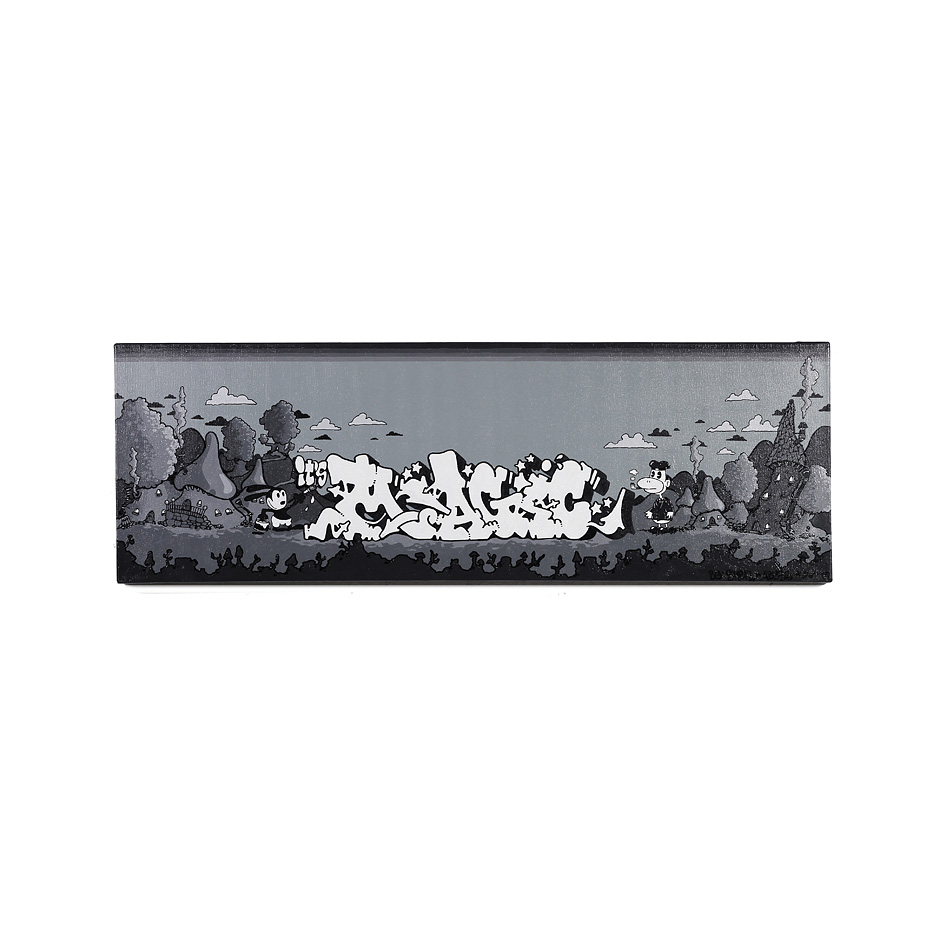
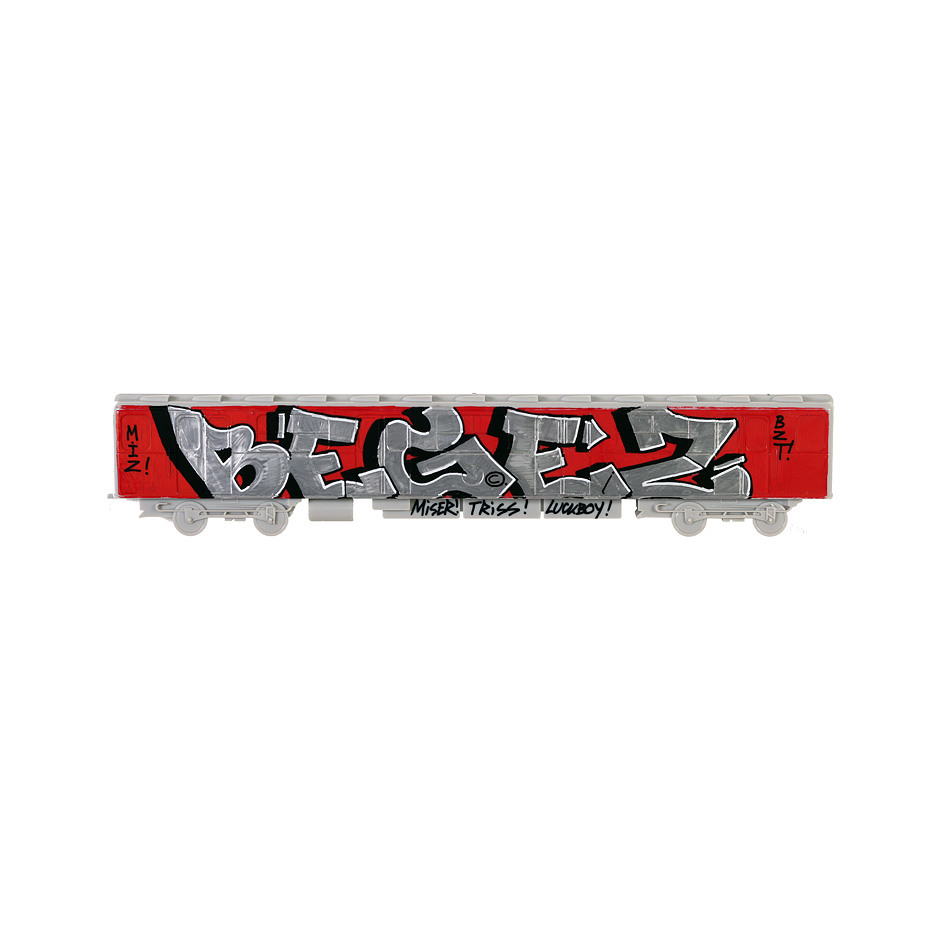
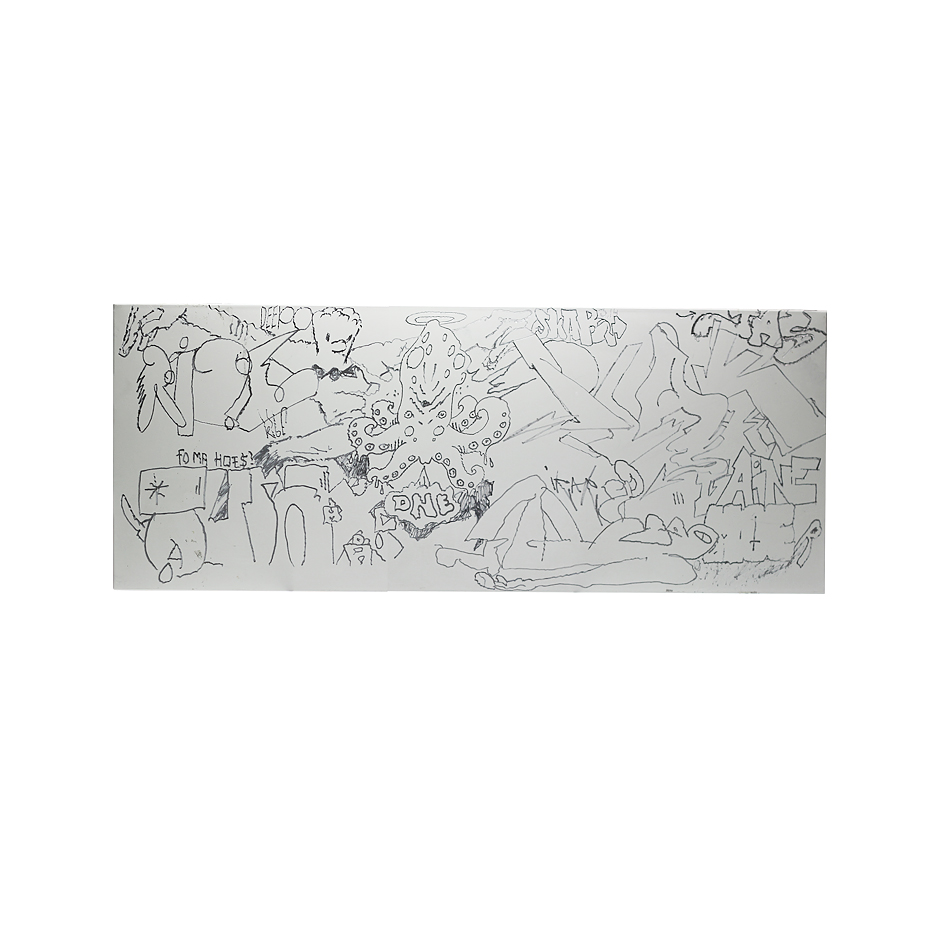
Äntligen har vi fotat av tavlorna från
Highlights 10 Year utställningen. Vissa verk som konstnärerna plockade
ner själva efter utställningen finns inte med men här är det urval som
vi fortfarande har kvar. Om du är intresserade av köpa något verk
kontakta: pontus@highlights.nu (Please send us a mail if you would like to by any artwork). Måtten på verken är uppskattade och ej exakta. Alla priser är exklusive ram om inte annat är skrivet. Vi reserverar för ev. skriv fel...
Om du är intresserad av verk
från någon av de konstnärer som ställde ut men inte finns med här så
kontakta oss så kan vi hjälpa till att förmedla kontakt. Bland de
konstnärer som deltog men inte finns med här är: Pike, Dwane, Ziggy,
Weston, Uzi, Star, Que och Dekis. För dig som vill se verken kolla in
filmen från utställningen. Vi bjuder även på en bonusvideo från STORs spelning.
Stort tack till alla konstnärer som
deltog, Slakthuset som lånade ut sina lokaler, alla artister som
uppträdde och självklart till alla kunder och vänner som kom och festade
med oss. Ett extra tack till Grolsch som bjöd på dricka!